Safety
The INHALE-1 trial showed a similar safety profile in pediatrics as previously seen in adult trials.1-3
Safety
The INHALE-1 trial showed a similar safety profile in pediatrics as previously seen in adult trials.1-3
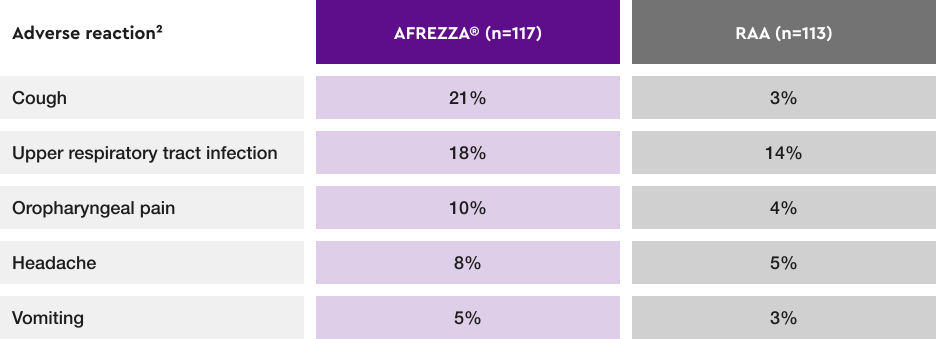
Safety outcomes for the first 26 weeks of the trial (RCT phase)2
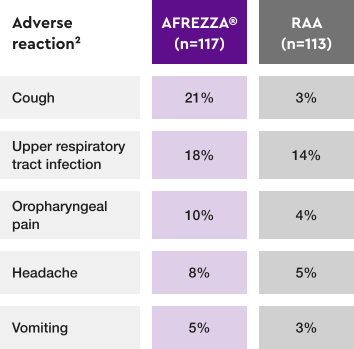
INHALE-1: Common adverse reactions observed in ≥5%, excluding hypoglycemia2,a
aAdverse reactions were not present at baseline and occurred more frequently with AFREZZA than with the comparator.2
INHALE-1: Cough characterization among children and adolescents
The study included a 26-week RCT phase, followed by a 26-week safety extension, with safety findings through 52 weeks remaining consistent with the 26-week safety profile.1,5
What is the safety profile of AFREZZA in children and adolescents?
In the INHALE-1 trial, the safety profile of AFREZZA in children and adolescents was consistent with that observed in adults and comparable to rapid-acting insulin analogs. The most common adverse reaction was cough (21% with AFREZZA vs 3% with RAA). Upper respiratory tract infection occurred in 18% of children and adolescents who received AFREZZA vs 14% of children and adolescents who received RAA.2
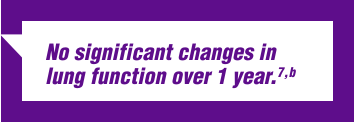
No difference in FEV1 between AFREZZA and RAA7
INHALE-1: Change in percent predicted FEV1 over 56 weeks7
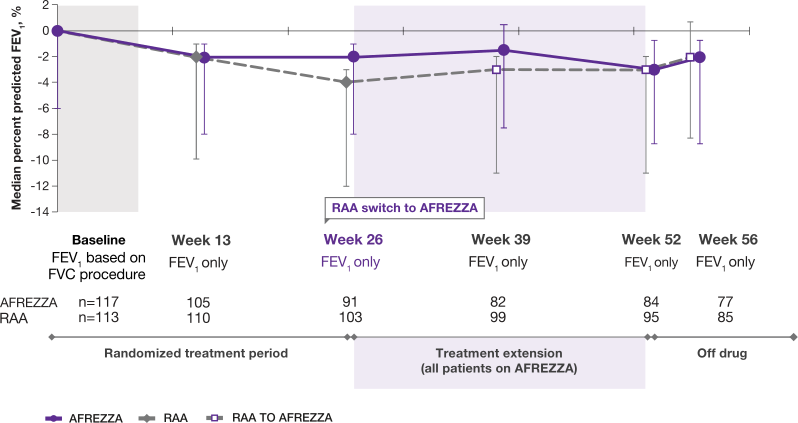
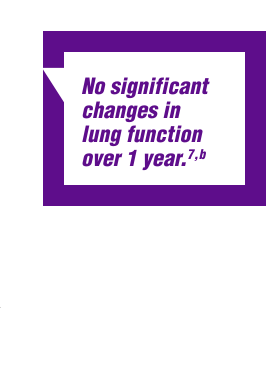
bP=0.54 for between-group differences in FEV1 from baseline to Week 26 in the RCT and to Week 52 in the extension study.7
Monitor patients
Assess pulmonary function at baseline, at 6 months, and annually thereafter.2
Does AFREZZA cause clinically meaningful lung function decline in children and adolescents?
No. In the INHALE-1 trial, AFREZZA did not cause clinically meaningful lung function decline compared with RAA. Mean change in percent predicted FEV1 at 26 weeks was -3.2% with AFREZZA vs -3.9% with RAA, P=0.54. At Week 56 (end of study), the percent predicted FEV1 levels trended upward toward baseline in both the AFREZZA and crossover RAA groups.7
Monitoring lung function
Patients starting AFREZZA receive an FEV1 kit and guidance conducting an FEV1 test.
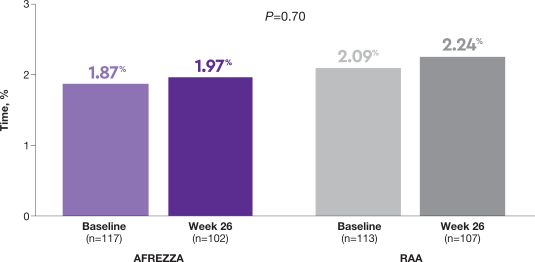
LEARN MORENo difference in hypoglycemia between AFREZZA and RAA1
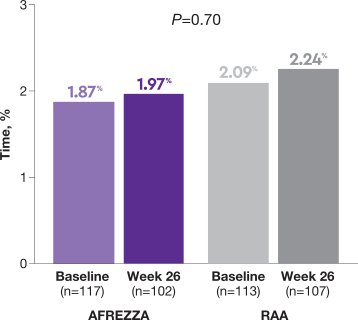
INHALE-1: Hypoglycemia CGM percentage time <70 mg/dL1,c,d
INHALE-1: Hypoglycemia CGM percentage time <54 mg/dL1,c,d
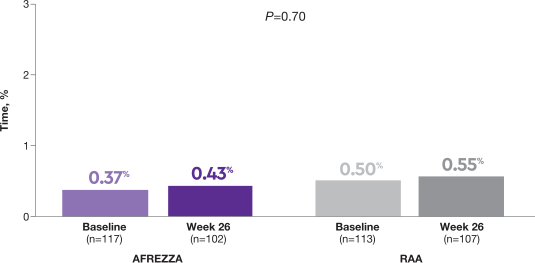
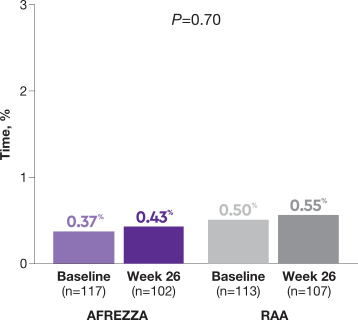
cWeek 26 adjusted treatment differences were -0.19 (95% CI: -0.92, 0.91; P=0.70) for time at <70 mg/dL and -0.06 (95% CI: -0.34, 0.37; P=0.70) for time at <54 mg/dL. These were estimated using a repeated-measures model adjusted for baseline and randomization strata.1
dBecause the hypoglycemia endpoints had skewed distributions, values were winsorized at the 10th and 90th percentiles. P values and CIs for the treatment effects for these outcomes were calculated using bootstrap.1
How does AFREZZA affect body weight and BMI in children and adolescents compared with injectable insulin?
In the INHALE-1 trial, children and adolescents treated with AFREZZA maintained stable BMI percentiles over 26 weeks, whereas children and adolescents receiving rapid-acting insulin analog experienced increases. BMI percentile remained 73.3 at baseline and Week 26 with AFREZZA vs increasing from 75.5 to 79.1 with RAA (difference, -4.2; 95% CI: -7.4, -0.9; P=0.009).1
BMI, body mass index; CGM, continuous glucose monitoring; FEV1, forced expiratory volume in 1 second; FVC, forced vital capacity; RAA, rapid-acting analog; RCT, randomized controlled trial.
References: 1. Haller MJ, Kanapka L, Monzavi R, et al; INHALE-1 Study Group. INHALE-1: a multicenter randomized trial of inhaled Technosphere insulin in children with type 1 diabetes. Diabetes Care. 2026;49(1):179-187. 2. AFREZZA. Prescribing information. MannKind Corporation; 2026. 3. Hirsch IB, Beck RW, Marak MC, et al; INHALE-3 Study Group. A randomized trial comparing inhaled insulin plus basal insulin versus usual care in adults with type 1 diabetes. Diabetes Care. 2025;48(3):353-360. 4. Data on file (Cough Characterizations). MannKind Corporation. 5. Beck RW, Kanapka L, Monzavi R, et al; INHALE-1 Study Group. Inhaled Technosphere insulin in children with diabetes: the INHALE-1 extension study. Diabetes Technol Ther. 2026:15209156261420176. 6. Data on file (INHALE-1 Clinical Study Report 2025). MannKind Corporation. 7. Haller MJ, Wood J. INHALE-1: a 26-week primary treatment with 26-week extension, open-label, randomized clinical trial evaluating the efficacy and safety of Afrezza® vs rapid-acting analogue insulin in pediatric subjects with diabetes. Poster presented at: ISAPD; November 5-8, 2025; Montreal, Canada.
© MannKind Corporation May 2026. US-AFR-2892