Efficacy in children and adolescents
AFREZZA® is an ultra rapid-acting inhaled insulin option for ages 6 years and older with diabetes.1

Efficacy in children and adolescents
AFREZZA® is an ultra rapid-acting inhaled insulin option for ages 6 years and older with diabetes.1
AFREZZA allows true mealtime dosing while improving postprandial glucose excursions1–4
INHALE-3: AFREZZA vs RAA glucose excursion in adults5
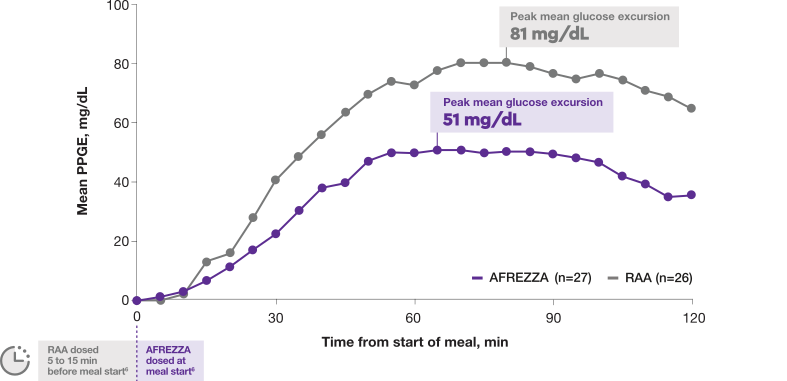
Mean PPG (mg/dL)5
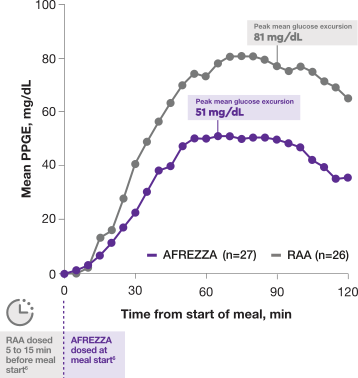
Mean PPG (mg/dL)5
INHALE-1: AFREZZA vs RAA glucose excursion in children and adolescents7
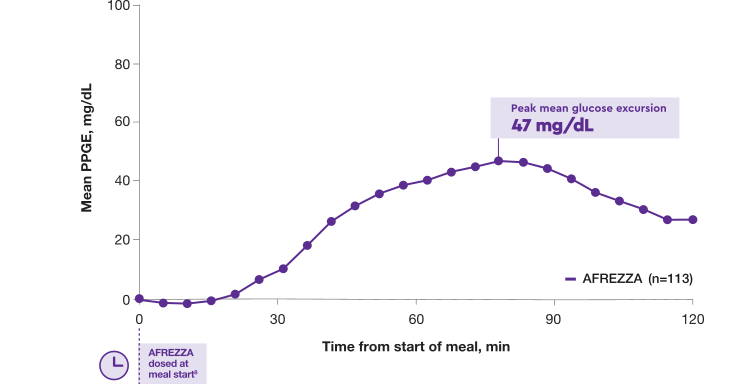
Mean PPG (mg/dL)7
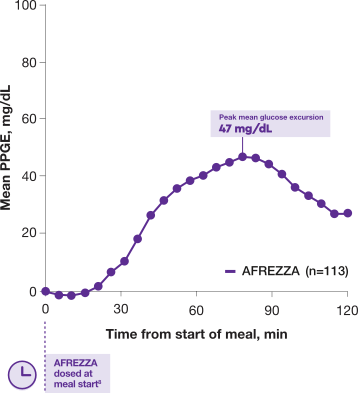
Mean PPG (mg/dL)7
AFREZZA is administered at the start of a meal and provides rapid postmeal glucose control comparable to injectable rapid-acting insulin analogs.1,3,4,9-11 In the INHALE-1 meal challenge, children and adolescents receiving AFREZZA showed postmeal glucose responses consistent with the rapid-onset profile previously observed in adults.5,7,8
Proven efficacy in children and adolescents1,12
INHALE-1: A Phase-3, open-label, noninferiority, randomized, controlled trial in those aged 4 to 17 years with A1C of ≥7.0% to ≤11.0%1,12,a
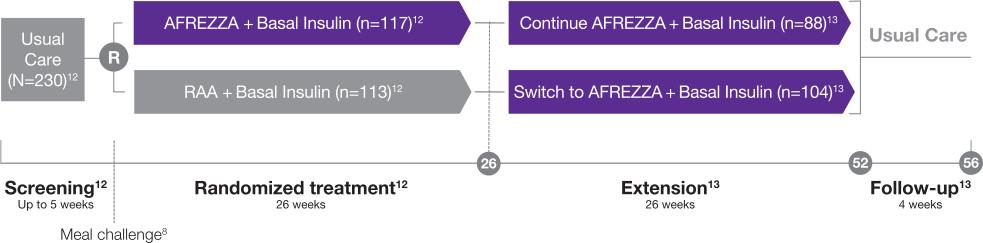
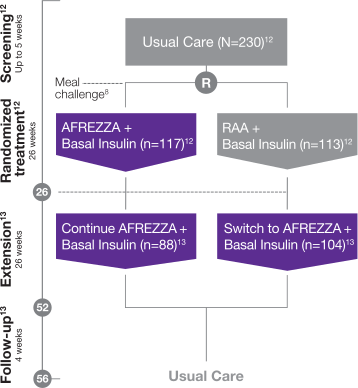
Secondary assessments: DTSQ scores, weight/BMI, and hypoglycemia12
INHALE-3: The clinical trial evaluating AFREZZA in adults
VIEW STUDY DESIGNaAFREZZA is indicated for patients as young as 6 years1; however, the INHALE-1 trial included children as young as 4 years.12
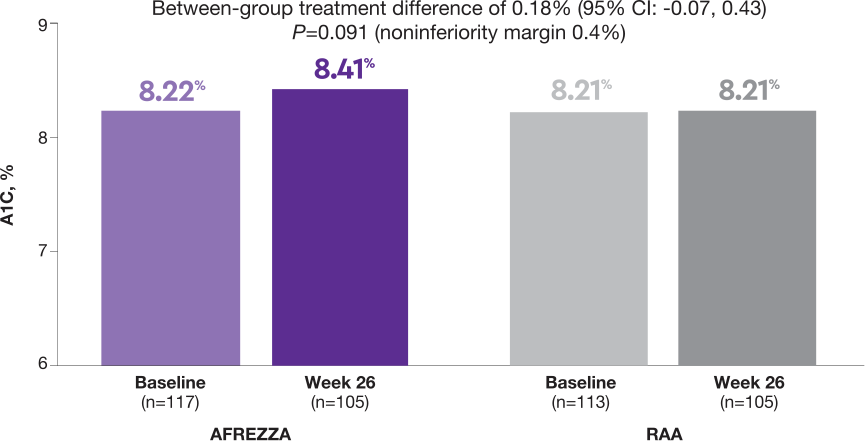
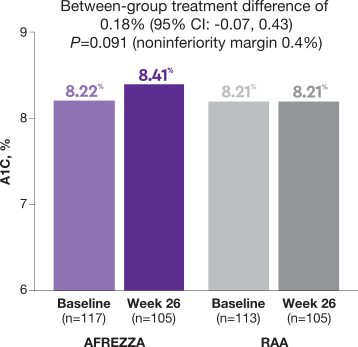
Change in A1C with AFREZZA and RAA1,12
INHALE-1: Change in A1C from baseline (primary endpoint)12
Higher treatment satisfaction with AFREZZA compared with RAA12,b-e
INHALE-1: DTSQs mean treatment satisfaction results from the analysis of adolescents and parents12,d,e
The mean treatment satisfaction score in the RAA group was reported at 4.60/6 from adolescents and 4.55/6 from parents.12,c

Components that the DTSQ survey assessed were the following:


What is AFREZZA?
AFREZZA (insulin human) Inhalation Powder is the only FDA-approved ultra rapid-acting inhaled mealtime insulin. It is indicated to improve glycemic control in children, adolescents, and adults 6 years of age and older with diabetes. AFREZZA is delivered as a dry powder through a small breath-activated inhaler with an onset of action of approximately 12 minutes.1
Are no injections needed with AFREZZA at mealtime?
Yes. AFREZZA is administered entirely by inhalation. There are no injections at mealtime. Patients who require basal insulin continue to administer that separately by injection. AFREZZA replaces only the mealtime (bolus) insulin component, eliminating mealtime injections.1
Which patients are appropriate candidates for AFREZZA?
AFREZZA is indicated for children, adolescents, and adults age 6 years and older with type 1 or type 2 diabetes who require mealtime insulin. It is contraindicated in patients with chronic lung disease, including asthma and COPD, due to the risk of acute bronchospasm. Spirometry (FEV₁) should be performed before initiating AFREZZA to identify potential lung disease in all patients, including those with no pulmonary history.1
A1C, glycated hemoglobin; BMI, body mass index; CGM, continuous glucose monitoring; COPD, chronic obstructive lung disease; DTSQ, Diabetes Treatment Satisfaction Questionnaire; FDA, US Food and Drug Administration; FEV1, forced expiratory volume in 1 second; ITT, intent-to-treat; PPG, postprandial glucose; PPGE, postprandial glucose excursion; RAA, rapid-acting analog; RCT, randomized controlled trial; SMBG, self-monitoring of blood glucose.
bAFREZZA: Mean treatment satisfaction in adolescents and parents was 4.63 (n=62) and 4.23 (n=53), respectively, at baseline and 4.99 (n=55) and 4.99 (n=42), respectively, at Week 26.12
cRAA: Mean treatment satisfaction in adolescents and parents was 4.62 (n=61) and 4.28 (n=52), respectively, at baseline and 4.60 (n=57) and 4.55 (n=51), respectively, at Week 26.12
dPooled treatment difference of AFREZZA vs RAA was statistically significant (P=0.004) for treatment satisfaction.12
eParticipants aged ≥13 years completed the DTSQ original status version (DTSQs) at baseline and 26 weeks, and the AFREZZA group also completed the DTSQ change version (DTSQc) at 26 weeks. A parent or guardian of participants aged <13 years completed the parent version of the surveys.12 Respondents were asked a series of questions, including “How satisfied are you with your current treatment?” or “How satisfied are you with your child’s current treatment?”14,15
© MannKind Corporation May 2026. US-AFR-2891