AFREZZA® AFFINITY Trial Efficacy in Adults

Proven efficacy in adults1

AFFINITY-1: Registrational study comparing AFREZZA® with MDI1
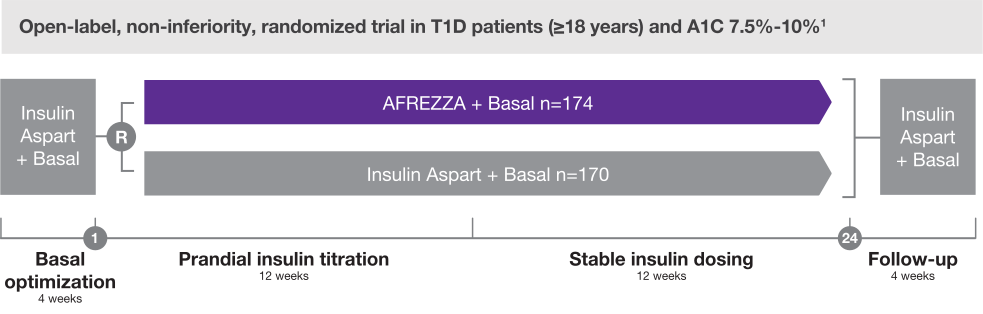
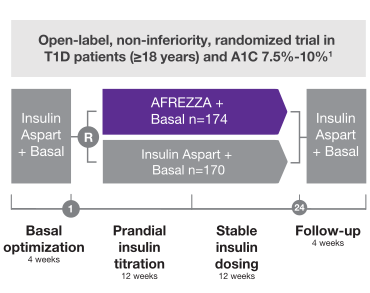
AFFINITY-1 trial study design: open-label, non-inferiority, randomized trial in T1D patients ≥18 years with A1C 7.5-10%. AFREZZA + Basal arm n=174 vs Insulin Aspart + Basal arm n=170, 4-week basal optimization, 12-week prandial insulin titration, 12-week stable insulin dosing, 4-week follow-up. AFFINITY-1 trial study design: open-label, non-inferiority, randomized trial in T1D patients ≥18 years with A1C 7.5-10%. AFREZZA + Basal arm n=174 vs Insulin Aspart + Basal arm n=170, 4-week basal optimization, 12-week prandial insulin titration, 12-week stable insulin dosing, 4-week follow-up.
Results:
Primary endpoint (Week 24): AFREZZA reduced A1C to 7.73% (-0.21%), and RAA to 7.52% (-0.40%), resulting in a between-group difference of 0.19%. AFREZZA and patients treated with RAA achieved similar average A1C reductions from baseline, satisfying the non-inferiority margin of 0.4%, and the difference was statistically significant.1

AFFINITY-2: Registrational trial comparing AFREZZA with placebo2
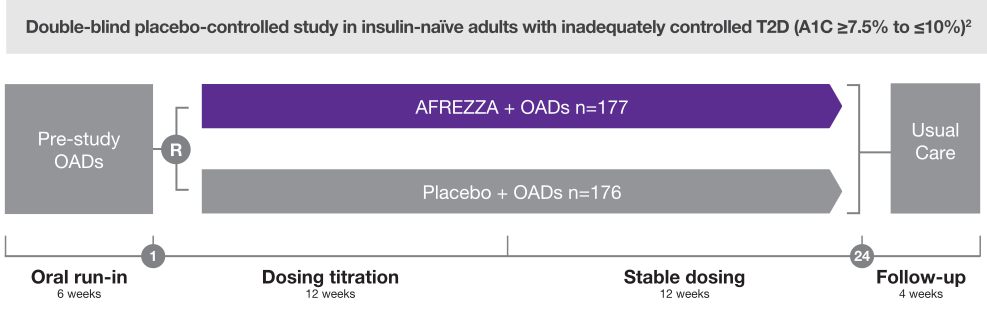
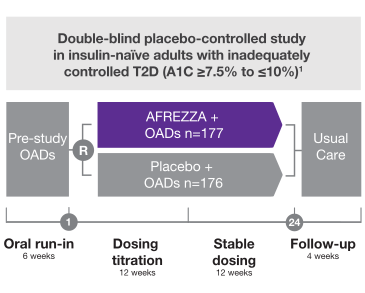
AFFINITY-2 trial study design: double-blind placebo-controlled study in insulin-naïve T2D adults with A1C ≥7.5% to ≤10%. AFREZZA + OADs n=177 vs Placebo + OADs n=176, 6-week oral run-in, 12-week dosing titration, 12-week stable dosing, 4-week follow-up. AFFINITY-2 trial study design (mobile view)
Results:
Primary endpoint (Week 24): AFREZZA reduced A1C to 7.43% (-0.82%) compared with 7.85% (-0.42%) in the placebo group, resulting in a between-group difference of 0.4% (P<0.0001). Treatment with AFREZZA plus OADs provided a mean reduction in A1C that was statistically significantly greater compared with the A1C reduction observed in the placebo plus OADs group.2

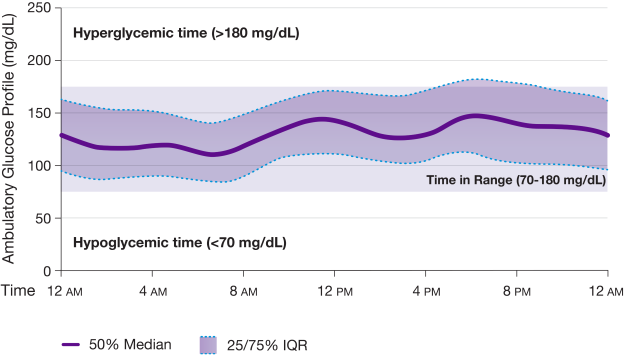
The ADA recommends patients with diabetes spend ≥70% Time in Range (TIR) per day3

AFREZZA ambulatory glucose profile case example4
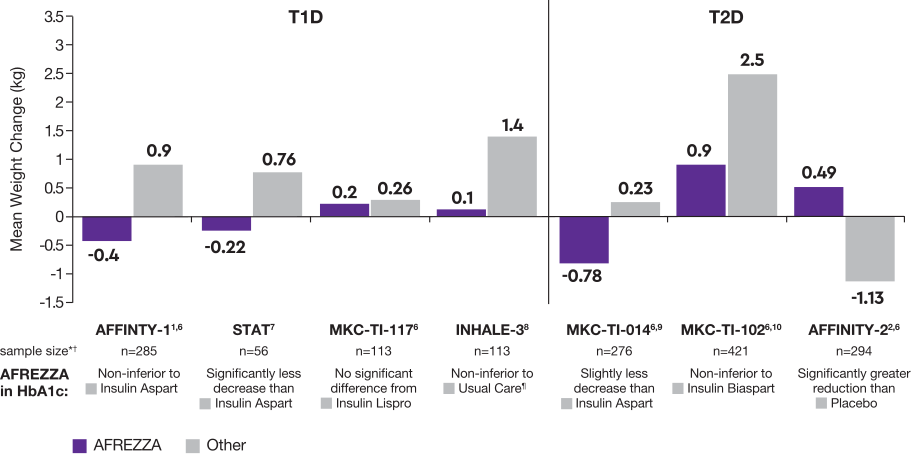
Cross-trial AFREZZA weight neutrality chart showing mean weight change (kg) at study end across AFFINITY-1 (n=285), STAT (n=24), MKC-TI-117 (n=113), INHALE-3 (n=110), MKC-TI-102 (n=472), and AFFINITY-2 (n=421) studies for both T1D and T2D populations.
Improved TIR correlates with A1C3

CGM data from a single AFREZZA patient.4

Cross-trial AFREZZA weight neutrality chart showing mean weight change (kg) at study end across AFFINITY-1 (n=285), STAT (n=24), MKC-TI-117 (n=113), INHALE-3 (n=110), MKC-TI-102 (n=472), and AFFINITY-2 (n=421) studies for both T1D and T2D populations.
SWIPE FOR MORE
Improved TIR correlates with A1C3

CGM data from a single AFREZZA patient.4

Reduced risk and severity of hypoglycemia5

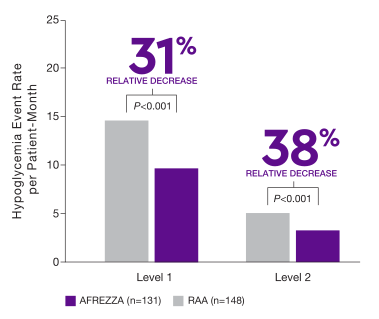
Hypoglycemia event rate with AFREZZA versus RAA5
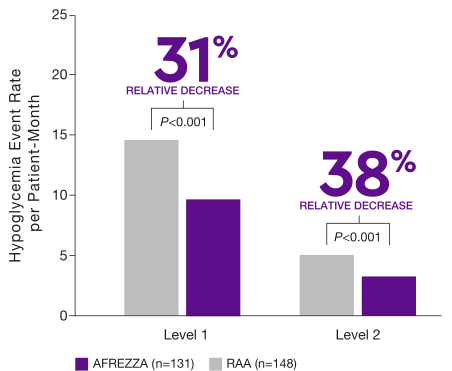
Hypoglycemia event rate per patient-month with AFREZZA (n=174) vs RAA (n=148): 31% relative decrease at Level 1 (P<0.01) and 38% relative decrease at Level 2 (P<0.001). Hypoglycemic events were significantly lower after the first 2 hours of dosing.
Hypoglycemic events were significantly lower after the first 2 hours of dosing5
Hypoglycemia event rate per patient-month with AFREZZA (n=174) vs RAA (n=148): 31% relative decrease at Level 1 (P<0.01) and 38% relative decrease at Level 2 (P<0.001). Hypoglycemic events were significantly lower after the first 2 hours of dosing.
Hypoglycemic events were significantly lower after the first 2 hours of dosing5

Data from a post-hoc regression analysis on a subset of the AFFINITY-1 study of adults (n=279) with T1D ≥12 months and an A1C level of 7.5% to 10%. Patients were randomized to receive basal insulin plus either AFREZZA or RAA aspart. These results should be interpreted along with the efficacy results for this study.5

The ultra-rapid time-action profile of AFREZZA may contribute to its reduced risk of hypoglycemic events compared with RAAs5

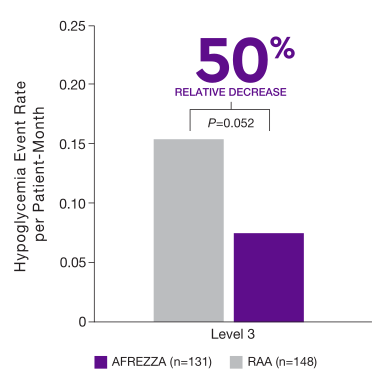
Lower rate of severe hypoglycemia with AFREZZA versus RAA5
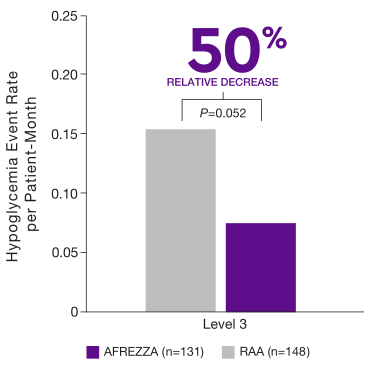
Severe hypoglycemia event rate per patient-month at Level 3: AFREZZA (n=131) vs RAA (n=148), 50% relative decrease, P=0.002.
Results align with full AFFINITY-1 safety analysis1,5

Data from a post-hoc regression analysis on a subset of the AFFINITY-1 study of adults (n=279) with T1D ≥12 months and an A1C level of 7.5% to 10%. Patients were randomized to receive basal insulin plus either AFREZZA or RAA aspart. A 5% significance level was used throughout the study. These results should be interpreted along with the efficacy results for this study.5

Severe hypoglycemia event rate per patient-month at Level 3: AFREZZA (n=131) vs RAA (n=148), 50% relative decrease, P=0.002.
Results align with full AFFINITY-1 safety analysis1,5

Data from a post-hoc regression analysis on a subset of the AFFINITY-1 study of adults (n=279) with T1D ≥12 months and an A1C level of 7.5% to 10%. Patients were randomized to receive basal insulin plus either AFREZZA or RAA aspart. A 5% significance level was used throughout the study. These results should be interpreted along with the efficacy results for this study.5

How does AFREZZA affect hypoglycemia risk compared with injectable insulin?
In clinical trials, AFREZZA was associated with an observed lower rate of severe hypoglycemia compared with RAA. In T1D studies, severe hypoglycemia event rates were reported to be about 44% to 50% lower with AFREZZA versus insulin aspart, although these differences were not statistically significant. AFREZZA was also associated with fewer hypoglycemic events later after meals, which may relate to its ultra rapid-acting time-action profile and faster return to baseline.1,5

AFREZZA continues to exhibit a weight-neutral profile1,2,6-10
AFREZZA ambulatory glucose profile (AGP) case example for a single AFREZZA patient via CGM, showing 50% median and 25/75% interquartile range curves over 24 hours with hyperglycemic time (>180 mg/dL) band, Time in Range 70-180 mg/dL band, and hypoglycemic time (<70 mg/dL) band.
SWIPE FOR MORE

Note: Cross-trial comparison should not be made due to differences in patient populations and trial designs.

*Values represent the sample size at the end of the respective studies.6

Patients in the Usual Care group were on AID or MDI.8

In the most recent study, INHALE-3 AFREZZA vs Usual Care, the comparator had a mean weight gain of 1.4 kg vs AFREZZA, which had 0.1 kg from baseline to 17 weeks8

A1C, glycated hemoglobin; ADA, American Diabetes Association; AID, automated insulin delivery; HbA1C, glycated hemoglobin; IQR, interquartile range; MDI, multiple daily injections; OAD, oral antidiabetic agent; RAA, rapid-acting analog; T1D, type 1 diabetes; T2D, type 2 diabetes.

References: 1. Bode BW, McGill JB, Lorber DL, Gross JL, Chang PC, Bregman DB; Affinity 1 Study Group. Inhaled Technosphere insulin compared with injected prandial insulin in type 1 diabetes: a randomized 24-week trial. Diabetes Care. 2015;38(12):2266-2273. 2. Rosenstock J, Franco D, Korpachev V, et al; Affinity 2 Study Group. Inhaled Technosphere insulin versus inhaled Technosphere placebo in insulin-naïve subjects with type 2 diabetes inadequately controlled on oral antidiabetes agents. Diabetes Care. 2015;38(12):2274-2281. 3. American Diabetes Association Professional Practice Committee. 6. Glycemic goals and hypoglycemia: standards of care in diabetes—2025. Diabetes Care. 2025;48(suppl 1):S128-S145. 4. Data on file (AFREZZA CGM TIR example). MannKind Corporation. 5. Seaquist ER, Blonde L, McGill JB, et al. Hypoglycaemia is reduced with use of inhaled Technosphere® insulin relative to insulin aspart in type 1 diabetes mellitus. Diabet Med. 2020;37(5):752-759. 6. Data on file (Weight-neutrality). MannKind Corporation. 7. Akturk HK, Snell-Bergeon JK, Rewers A, et al. Improved postprandial glucose with inhaled Technosphere insulin compared with insulin aspart in patients with type 1 diabetes on multiple daily injections: the STAT study. Diabetes Technol Ther. 2018;20(10):639-647. 8. Hirsch IB, Beck RW, Marak MC, et al; INHALE-3 Study Group. A randomized trial comparing inhaled insulin plus basal insulin versus usual care in adults with type 1 diabetes. Diabetes Care. 2025;48(3):353-360. 9. Hoogwerf BJ, Pantalone KM, Basina M, Jones MC, Grant M, Kendall DM. Results of a 24-week trial of Technosphere insulin versus insulin aspart in type 2 diabetes. Endocr Pract. 2021;27(1):38-43. 10. Rosenstock J, Lorber DL, Gnudi L, et al. Prandial inhaled insulin plus basal insulin glargine versus twice daily biaspart insulin for type 2 diabetes: a multicentre randomized trial. Lancet. 2010;375(9733):2244-2253.

Indications and Usage:

Afrezza® (insulin human) Inhalation Powder is a rapid acting inhaled human insulin indicated to improve glycemic control in adult and pediatric patients 6 years of age and older with diabetes mellitus.

Limitations of Use: Not recommended for the treatment of diabetic ketoacidosis, not recommended in patients who smoke or have recently stopped smoking.

Important Safety Information

WARNING: RISK OF ACUTE BRONCHOSPASM IN PATIENTS WITH CHRONIC LUNG DISEASE

  • Acute bronchospasm has been observed in AFREZZA-treated patients with asthma and Chronic Obstructive Pulmonary Disease (COPD).
  • AFREZZA is contraindicated in patients with chronic lung disease such as asthma or COPD.
  • Before initiating AFREZZA, perform a detailed medical history, physical examination, and spirometry (FEV1) to identify potential lung disease in all patients.