INHALE-3 Trial: AFREZZA® Compared to Injectables and Pumps

INHALE-3 trial: Comparing AFREZZA® to injectables and pumps

Learn about our latest
INHALE-3 clinical trial

Header banner with photo of Dr. Kevin Kaiserman, SVP Medical Affairs, with Learn about our latest INHALE-3 clinical trial video CTA.
Dr. Kevin Kaiserman SVP Medical Affairs
Dr. Kevin Kaiserman
INHALE-3 Study Summary

Primary endpoint met: AFREZZA demonstrated similar A1C control compared with Usual Care¹

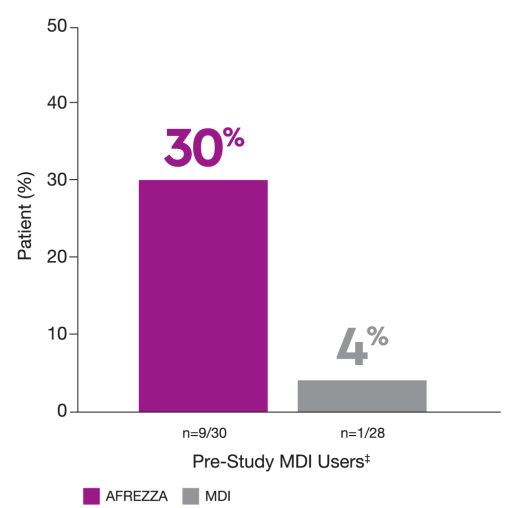
More patients achieved A1C goal vs MDI¹

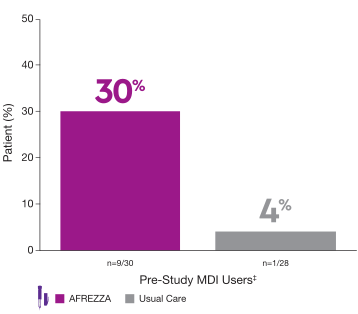
30% of participants who switched from MDI to AFREZZA achieved an A1C <7% compared to 4% who remained on MDI

Achieved similar results to AID without a tethered device¹
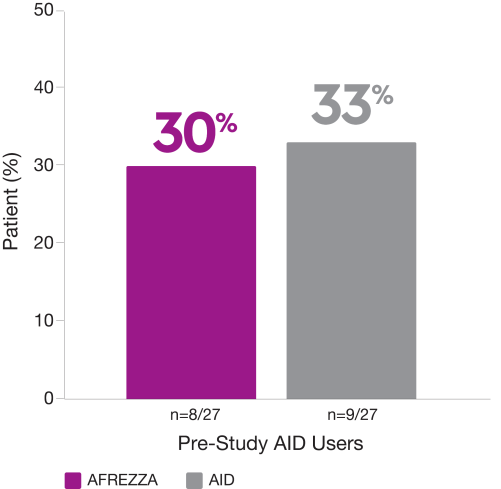
The AFREZZA and AID groups achieved comparable glycemic goals (A1C <7% and TIR >70%)

Demonstrated established safety profile¹

  • Similar percentage of hypoglycemia by CGM
  • No significant difference in FEV₁

Consider AFREZZA in your treatment options

CONTACT A MANNKIND SALES REPRESENTATIVE TODAY
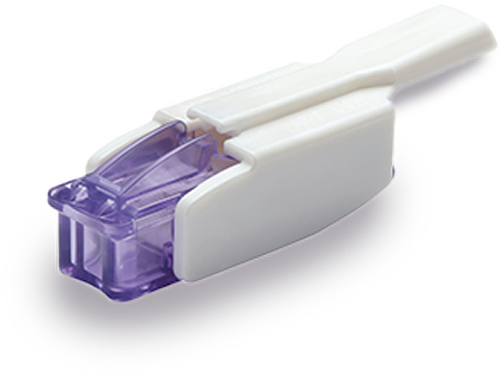
AFREZZA inhaler device illustration paired with More patients achieved A1C goal vs MDI callout.
Study Design

INHALE-3 study design1–3

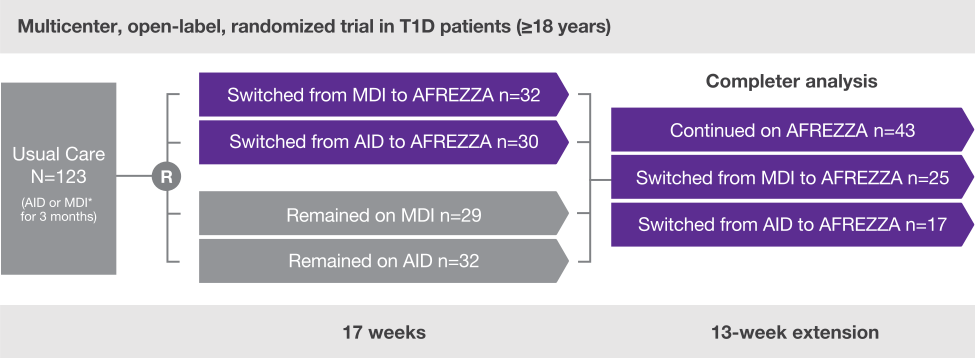
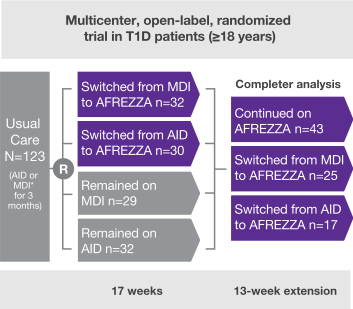
INHALE-3 study design: multicenter, open-label, randomized trial in T1D patients ≥18 years. Usual Care arm n=123 (MDI or AID for 3 months), then randomization. Switched from MDI to AFREZZA n=32, switched from AID to AFREZZA n=30, remained on MDI n=29, remained on AID n=32. 17-week primary phase plus 13-week extension. INHALE-3 study design (mobile view)
Results:
Primary endpoint (Week 17): AFREZZA group maintained an A1C of 7.6% (0%), while the Usual Care group reduced to 7.5% (0.1%), meeting the non-inferiority margin of 0.4% (P=0.01).1
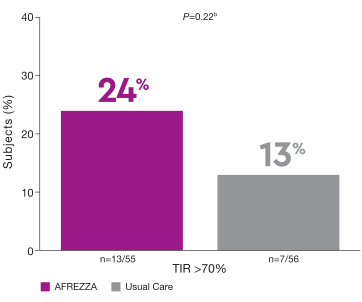
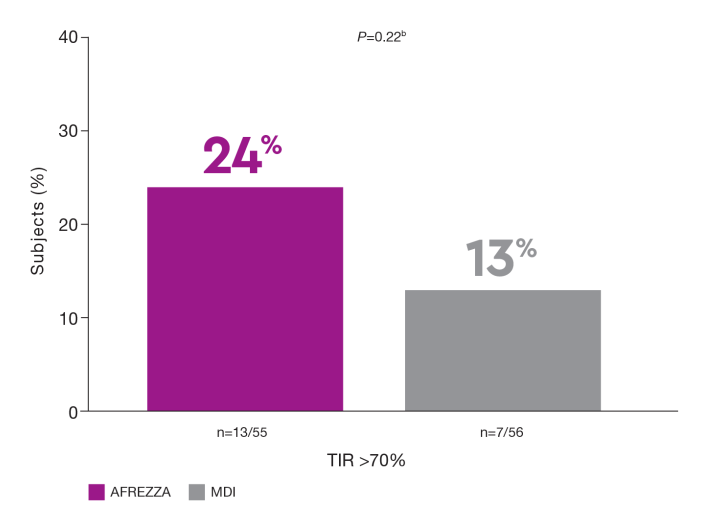
Secondary endpoint (Week 17): TIR was >70% for 24% of the AFREZZA group and 13% of the Usual Care group (mean change 12%, 95% CI -7% to 38%).1
TIR endpoint (Week 17 to Week 30, UC to AFREZZA): Daytime TIR increased from 50% ±17% at baseline to 55% ±20% after 13 weeks (mean change 5.1%; 95% CI 0.3–9.8), meeting the prespecified noninferiority criterion (margin 5%; P<0.001) and demonstrating statistical superiority vs baseline (P=0.04).2
HbA1c endpoint (Week 17 to Week 30, AFREZZA continuation): Average change in A1C was -0.21% (95% CI -0.33% to -0.09%, P<0.001).3

*Includes non-automated pumps.1,3

Patients randomized to AFREZZA maintained A1C levels of 7.6 over 17 weeks1
Efficacy

AFREZZA vs Usual Care: more patients on AFREZZA achieved A1C goals1,4

More AFREZZA patients achieved an A1C <7% compared to Usual Care1,4

A1C Change From Baseline in All Participants1

(Exploratory endpoint)
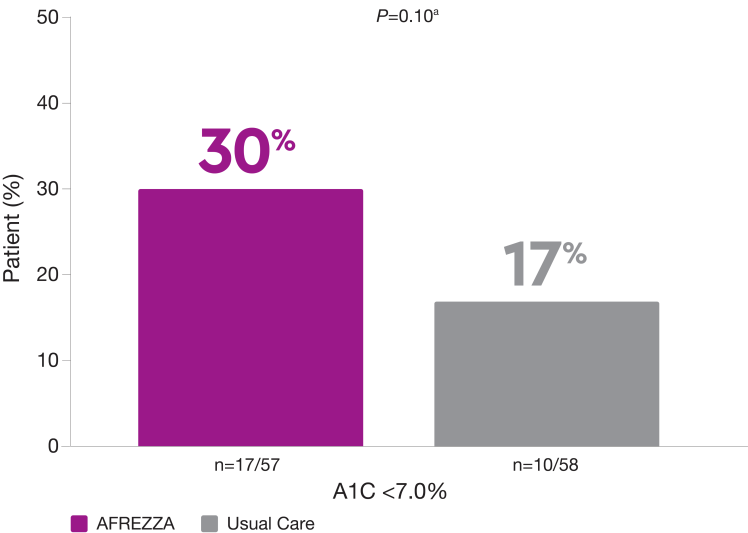
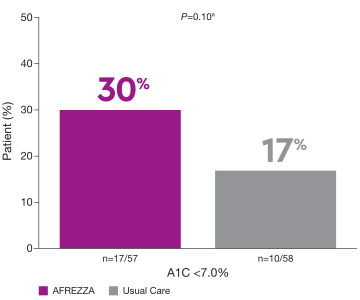
A1C Change From Baseline in All Participants exploratory endpoint: 30% of AFREZZA patients (n=17/57) achieved A1C <7.0% versus 17% of Usual Care patients (n=10/58). P=0.10. A1C Change From Baseline in All Participants (mobile view)
a17-week treatment difference between AFREZZA and Usual Care (95% CI); P-value.1
Proportion of patients experiencing a >0.5% change in A1C: Among all subjects, 21% of AFREZZA patients had a >0.5% decrease in A1C compared with 5% in the Usual Care group. Conversely, 26% of AFREZZA patients achieved a >0.5% increase in A1C, compared with 3% in the Usual Care group1

In patients with a baseline A1C >7%, only AFREZZA patients achieved A1C goals by Week 171,4

A1C Change From Baseline in Participants With Baseline A1C >7%1,4

(Exploratory endpoint)
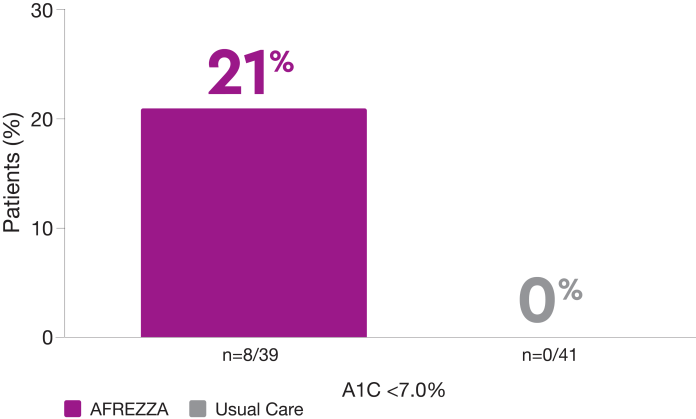
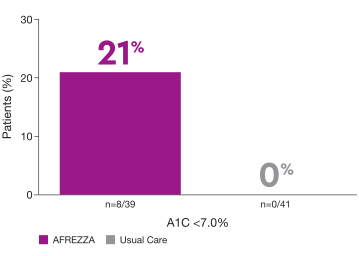
A1C Change From Baseline in Participants With Baseline A1C >7% exploratory endpoint: 21% of AFREZZA patients (n=8/39) achieved A1C <7.0% versus 0% of Usual Care patients (n=0/41). A1C Change From Baseline in Participants With Baseline A1C >7% (mobile view)
Proportion of patients experiencing a >0.5% change in A1C: Among subjects with a baseline A1C >7%, 28% of AFREZZA patients had a >0.5% decrease in A1C compared with 7% in the Usual Care group. Conversely, 21% of AFREZZA patients achieved a >0.5% increase in A1C, compared with 2% in the Usual Care group4

AFREZZA vs Usual Care: time in range outcomes1

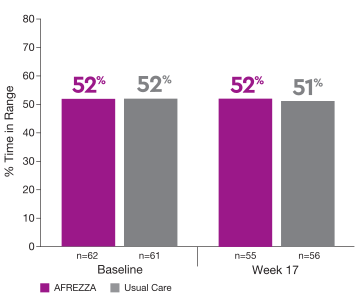
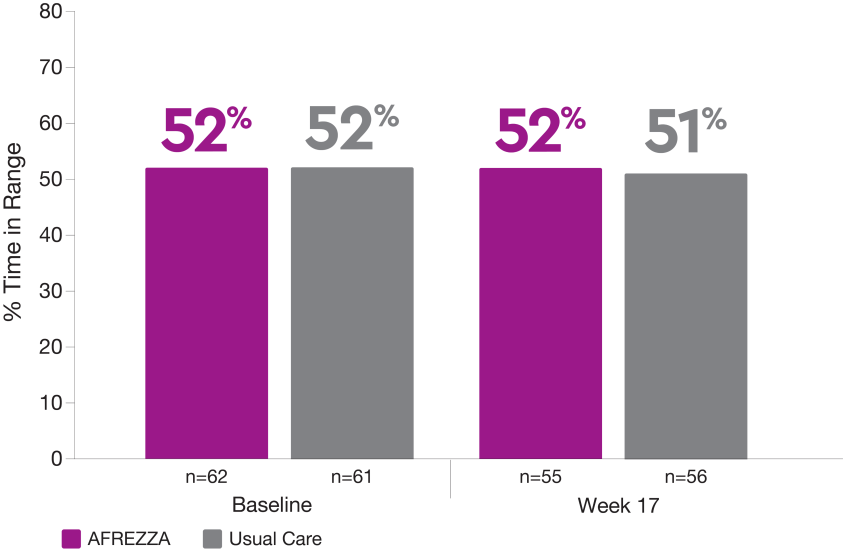
AFREZZA maintained TIR at Week 171

Percent Time in Range (70–180 mg/dL)
Time in Range 70-180 mg/dL >70% at 17 Weeks: 24% of AFREZZA patients (n=13/56) achieved TIR >70% versus 13% of MDI patients (n=7/56). P=0.22. TIR >70% at 17 Weeks (mobile view)

More AFREZZA patients improved TIR1

Time in Range (70–180 mg/dL) >70% at 17 Weeks
Percent Time in Range 70-180 mg/dL: AFREZZA 52% at baseline (n=62) and 52% at Week 17 (n=55); Usual Care 52% at baseline (n=61) and 51% at Week 17 (n=56). A1C <7% subgroup comparison Pre-Study MDI Users (mobile view): 30% AFREZZA (n=9/30) vs 4% MDI (n=1/28).
b17-week treatment difference between AFREZZA and Usual Care (95% CI); P-value.1
Proportion of patients experiencing a ≥10% change in TIR: Among all subjects, 25% of AFREZZA patients increased TIR by ≥10% compared to 14% on Usual Care. Conversely, 31% of AFREZZA patients decreased TIR by ≥10%, compared to 18% on Usual Care1

Delivery methods matter1,4†

More AFREZZA patients achieved…

AIC <7% Than Those on MDI

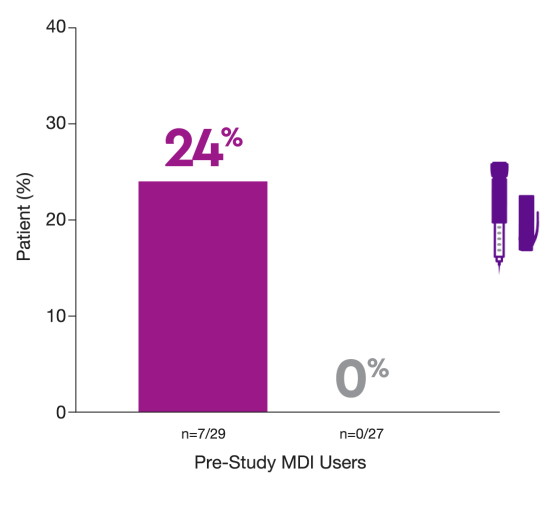
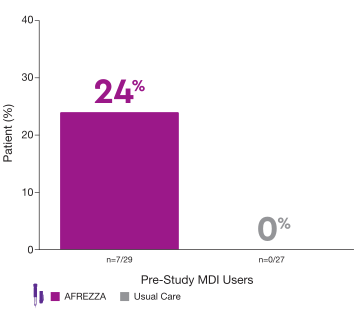
TIR >70% subgroup Pre-Study MDI Users (mobile view): 24% AFREZZA (n=7/29) vs 0% MDI (n=0/27).

>70% TIR Than Those on MDI

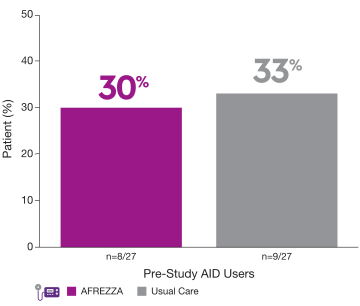
A1C Results Pre-Study AID Users (mobile view): 30% AFREZZA (n=8/27) vs 33% AID (n=9/27).
Subanalysis endpoints stratified by pre-study insulin delivery method.
Three Basal-IQ users were excluded from this analysis.4

Patients who switched to AFREZZA experienced…1

A1C Results (7%) Similar to Those Who Remained on AID
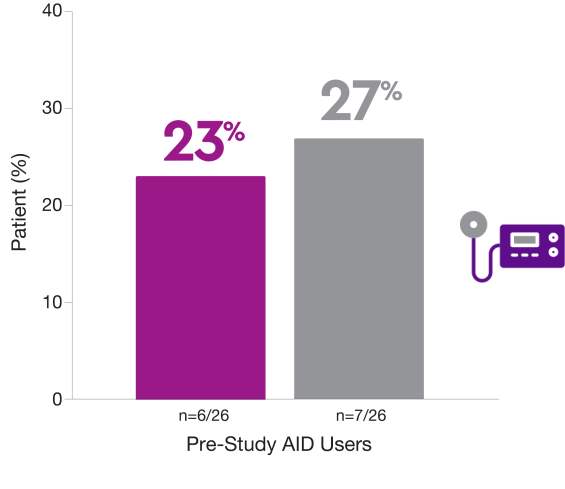
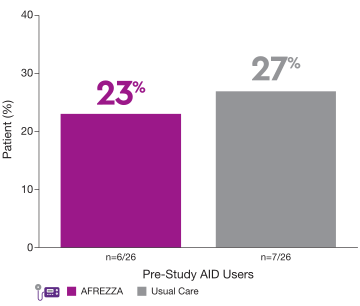
TIR Results Pre-Study AID Users (mobile view): 23% AFREZZA (n=6/26) vs 27% AID (n=7/26).

TIR Results (>7%) Similar to Those Who Remained on AID
TIR Results vs AID (mobile, alternate view)

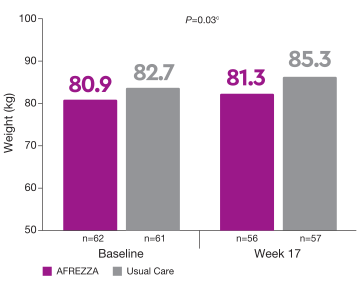
Weight-neutrality1

The Usual Care group gained statistically more weight than the AFREZZA group

17-Week Treatment Difference (95% CI)
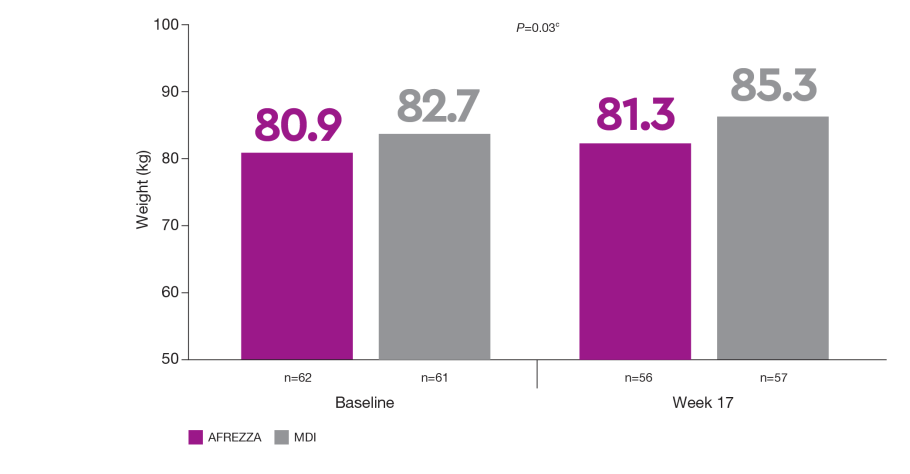
Weight at Baseline and Week 17, AFREZZA vs MDI: AFREZZA 80.9 kg baseline to 81.3 kg Week 17 (n=62 to n=58); Usual Care 82.7 kg to 85.3 kg (n=61 to n=57). Mean weight gain after 17 weeks: AFREZZA 0.1 kg vs Usual Care 1.4 kg. Weight neutrality at Baseline and Week 17 (mobile view)
cDifference is AFREZZA minus Usual Care.
§Totals are calculated for participants without missing data.

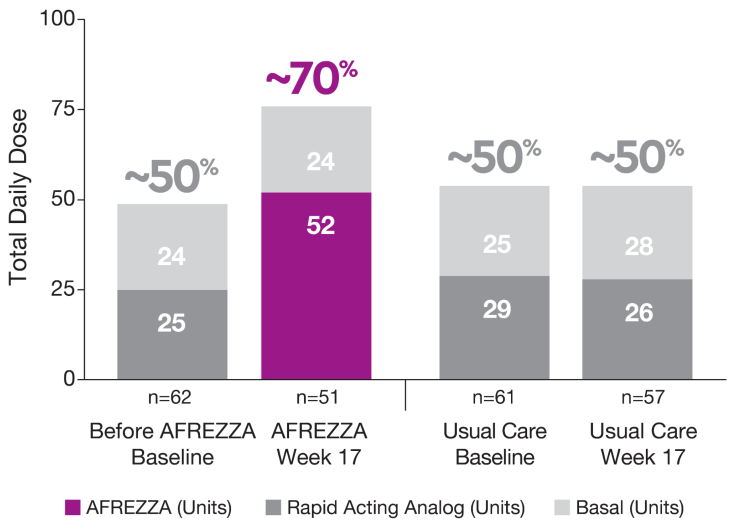
AFREZZA UNITS: different bolus to basal insulin dose ratio at Week 175

Before AFREZZA (baseline): Patients on usual care (which includes rapid-acting analog bolus insulin) had a ~50/50 bolus-to-basal insulin ratio5
AFREZZA at Week 17: Titrated dose was ~70% bolus (in AFREZZA UNITS) to 30% basal insulin5
Usual Care baseline and Usual Care Week 17: For those continuing on usual care, the ratio remains consistent at 50% bolus and 50% basal5

Total Daily Insulin1,5||#

Total Daily Insulin dose composition: Before AFREZZA baseline ~50% bolus / 50% basal (24 units bolus, 25 units basal); AFREZZA at Week 17 ~70% bolus (52 AFREZZA UNITS) / 30% basal (29 units); Usual Care baseline ~50%/50% (24/25); Usual Care Week 17 ~50%/50% (25/26). Total Daily Insulin dose composition (mobile view)
||Percentages represent bolus to total ratio.1
#Note: AFREZZA arm used insulin degludec for basal.5
What did the INHALE-3 trial find?
INHALE-3 was a clinical trial comparing glycemic outcomes of an insulin regimen of a daily basal injection of degludec plus AFREZZA vs Usual Care in adult patients with T1D. The trial demonstrated statistically significant improvements in time in range (TIR) compared with Usual Care. Patients who received AFREZZA showed meaningful reductions in postprandial glucose excursions and A1C.1
Safety

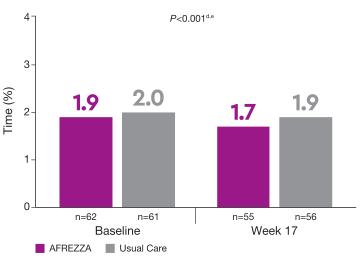
Safety: comparable time in hypoglycemic range observed1**

Percent Time <70 mg/dL
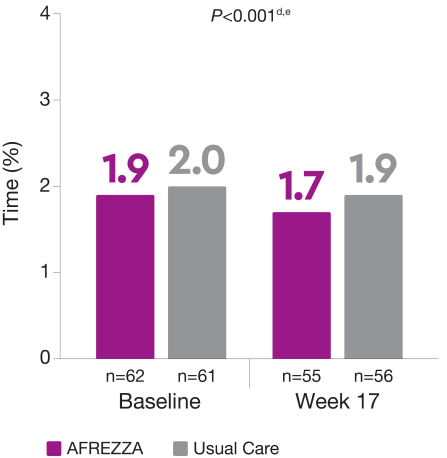
Percent Time <70 mg/dL hypoglycemia: AFREZZA 1.9% baseline to 2.0% Week 17; Usual Care 1.7% baseline to 1.9% Week 17 (n=62/61 baseline, n=55/56 Week 17). P=0.001 difference AFREZZA minus Usual Care, non-inferiority margin 2.4%. Percent Time <70 mg/dL hypoglycemia: AFREZZA 1.9% baseline to 2.0% Week 17; Usual Care 1.7% baseline to 1.9% Week 17 (n=62/61 baseline, n=55/56 Week 17). P=0.001 difference AFREZZA minus Usual Care, non-inferiority margin 2.4%.

Percent Time <54 mg/dL

Percent Time <70 mg/dL hypoglycemia: AFREZZA 1.9% baseline to 2.0% Week 17; Usual Care 1.7% baseline to 1.9% Week 17 (n=62/61 baseline, n=55/56 Week 17). P=0.001 difference AFREZZA minus Usual Care, non-inferiority margin 2.4%. Percent Time <70 mg/dL hypoglycemia: AFREZZA 1.9% baseline to 2.0% Week 17; Usual Care 1.7% baseline to 1.9% Week 17 (n=62/61 baseline, n=55/56 Week 17). P=0.001 difference AFREZZA minus Usual Care, non-inferiority margin 2.4%.
**On a self-reported log, more BG measurements in the hypoglycemic range were recorded by participants in AFREZZA group than Usual Care group.4
dDifference is AFREZZA minus Usual Care.1
eNon-inferiority margin=2.0%.1
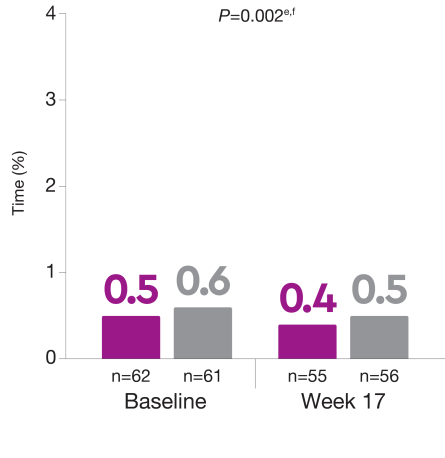
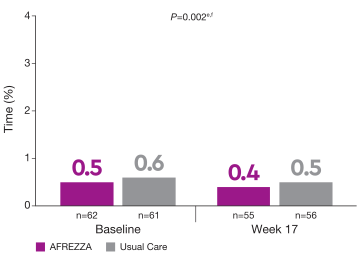
fNon-inferiority margin=0.5%.1

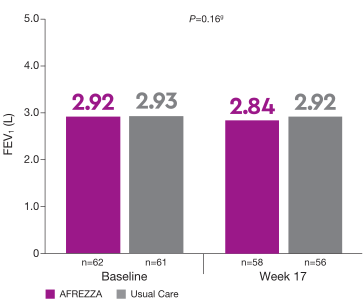
No significant change in pulmonary function1

FEV₁ showed no significant difference between groups at 17 weeks

Mean FEV₁ Change From Baseline to 17 Weeks1
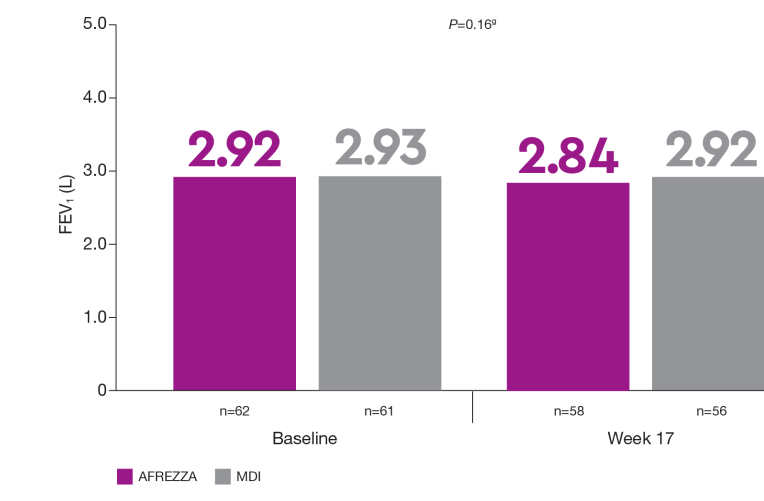
Adverse events table (centered layout) Percent Time <54 mg/dL severe hypoglycemia: AFREZZA 0.5% baseline to 0.6% Week 17; Usual Care 0.4% baseline to 0.5% Week 17. P=0.002 non-inferiority margin 0.9%.
gDifference is AFREZZA minus Usual Care.

Adverse events1††

Adverse events table: AFREZZA (n=62) vs Usual Care (n=61). Severe Hypoglycemia Events: 1 vs 0. Diabetic Ketoacidosis Events: 0 vs 0. Other Serious Adverse Events: 0 vs 2. Adverse events table (mobile view)
††Adverse events occurring in each treatment group between randomization and 17 weeks post-randomization.1
hSAEs: hospitalizations for hyperglycemia/ketosis and for appendectomy.1

Treatment-emergent adverse events:

Cough is the most commonly reported AE in the AFREZZA group (14 of 62)4
Only other TEAE >5% was shortness of breath (5 of 62)1,4
Individualized Insulin Therapy

Individualized insulin therapy for your patient: a possible scenario based on INHALE-3 study design and results4,6
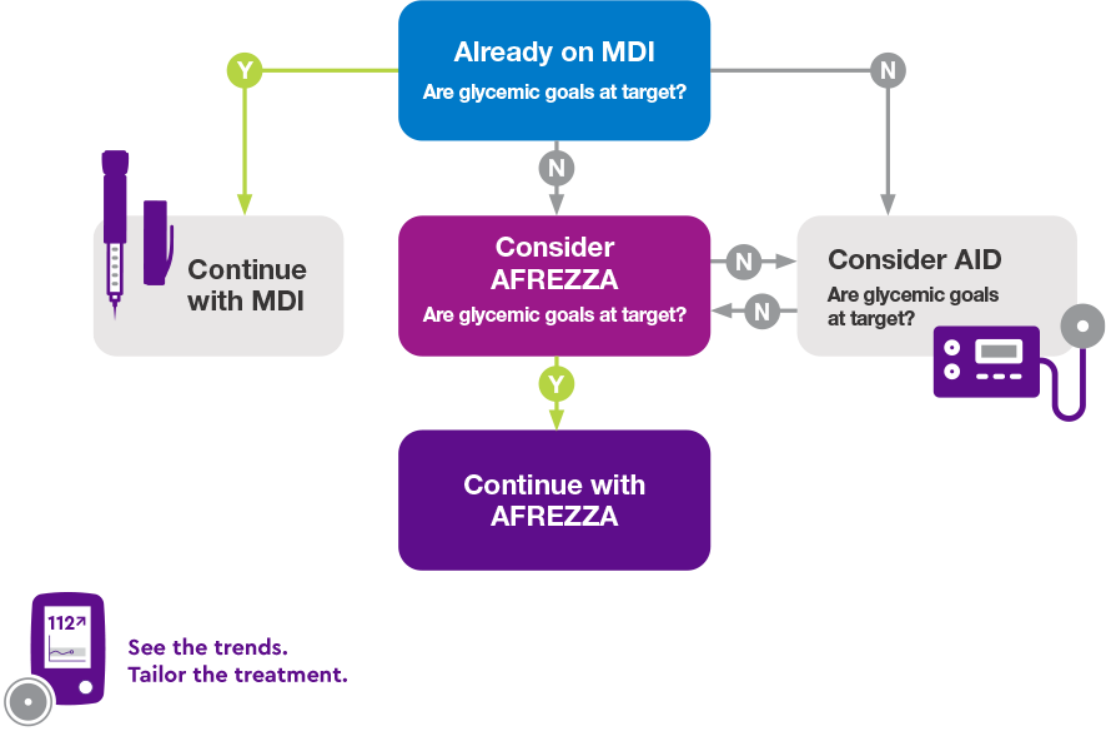
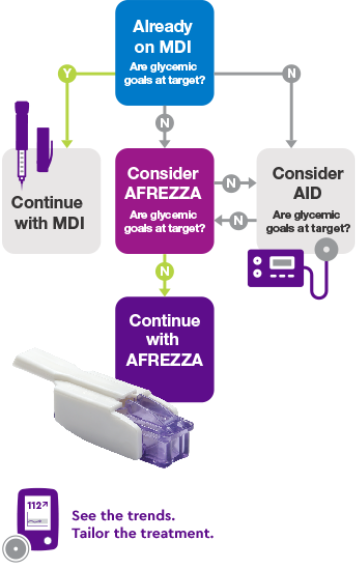
Individualized insulin therapy decision tree: Patient already on MDI? If yes and glycemic goals at target, continue with MDI. If not at target, consider AFREZZA. If not at target, consider AID. Individualized insulin therapy decision tree (mobile view)

A1C=glycated hemoglobin; AID=automated insulin delivery; BG=blood glucose; CGM=continuous glucose monitor; FEV1=forced expiratory volume in one second; MDI=multiple daily injections; PLG=predictive low-glucose suspend technology; TIR=time in range; T1D=type 1 diabetes.

References: 1. Hirsch IB, Beck RW, Marak MC, et al; INHALE-3 Study Group. A randomized trial comparing inhaled insulin plus basal insulin versus usual care in adults with type 1 diabetes. Diabetes Care. 2025;48(3):353-360. 2. Beck RW, Bailey RJ, Akturk HK, et al; INHALE-3 Study Group. A 13-week single-arm evaluation of inhaled Technosphere insulin plus insulin degludec for adults with type 1 diabetes. Diabetes Technol Ther. 2025;27(3):161-169. 3. Beck RW, Bailey RJ, Klein KR, et al; INHALE-3 Study Group. Inhaled Technosphere insulin plus insulin degludec for adults with type 1 diabetes: the INHALE-3 extension study. Diabetes Technol Ther. 2025;27(3):170-178. 4. Data on file (INHALE-3 Clinical Study Report 2024). MannKind Corporation. 5. Data on file. (INHALE-3 Bolus Basal). MannKind Corporation. 6. American Diabetes Association Professional Practice Committee for Diabetes. 9. Pharmacologic approaches to glycemic treatment: standard of care in diabetes—2024. Diabetes Care. 2024;47(suppl 1):S158-S178.

Indications and Usage:

Afrezza® (insulin human) Inhalation Powder is a rapid acting inhaled human insulin indicated to improve glycemic control in adult and pediatric patients 6 years of age and older with diabetes mellitus.

Limitations of Use: Not recommended for the treatment of diabetic ketoacidosis, not recommended in patients who smoke or have recently stopped smoking.

Important Safety Information

WARNING: RISK OF ACUTE BRONCHOSPASM IN PATIENTS WITH CHRONIC LUNG DISEASE

  • Acute bronchospasm has been observed in AFREZZA-treated patients with asthma and Chronic Obstructive Pulmonary Disease (COPD).
  • AFREZZA is contraindicated in patients with chronic lung disease such as asthma or COPD.
  • Before initiating AFREZZA, perform a detailed medical history, physical examination, and spirometry (FEV1) to identify potential lung disease in all patients.