AFREZZA® outpaces RAA, with a faster start and earlier peak effect1-4
People without diabetes: Time to peak insulin concentration is ~45 minutes5
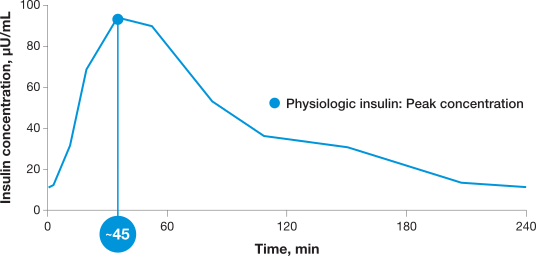
Time-action profiles: AFREZZA and SC RAA comparison1-4
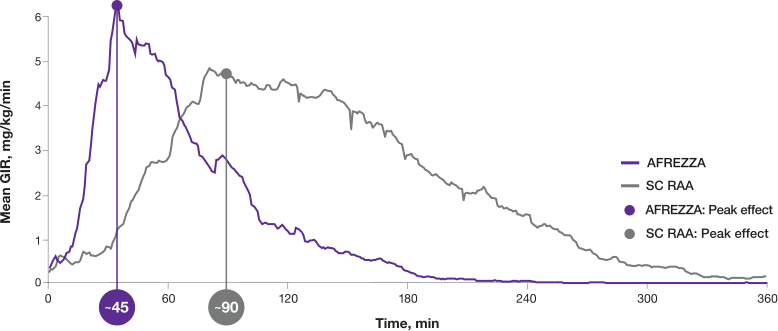
Data are from an open-label, randomized, controlled, crossover study that compared the area under the glucose infusion rate versus time curve (GIR AUC) of AFREZZA (12 units) with SC RAA lispro (8 units) in 30 adult patients with T1D. Each volunteer received 3 different doses of each treatment over a series of 6 euglycemic clamps. The time course of insulin action may vary considerably in different individuals or within the same individual.1,2
How does the onset of action of AFREZZA compare with injectable rapid-acting insulin?
AFREZZA has an ultra-rapid onset of approximately 12 minutes, which is faster than available SC RRAs that have an onset of approximately 15 to 20 minutes.2,4 The shorter duration of action of AFREZZA more closely mimics physiologic postprandial insulin secretion, which may reduce the risk of late postprandial hypoglycemia.2,3,5,8
Comparing the time-action of AFREZZA vs physiologic insulin and SC RAA1,2,5,9,10
aData shown are for the 12-unit doses. The 48-unit doses have a time to peak effect of 55 minutes and time for effect to return to baseline of 270 minutes.2
Insulin secretion data obtained from a study in healthy subjects (n=10) to estimate insulin sensitivity based on a MGTT. Delivery data obtained from the prescribing information for inhaled and SC RAA insulin therapies and a quantitative comparison of GIR profiles for AFREZZA and lispro.1,2,9,10
AFREZZA is an ultra rapid-acting inhaled insulin2
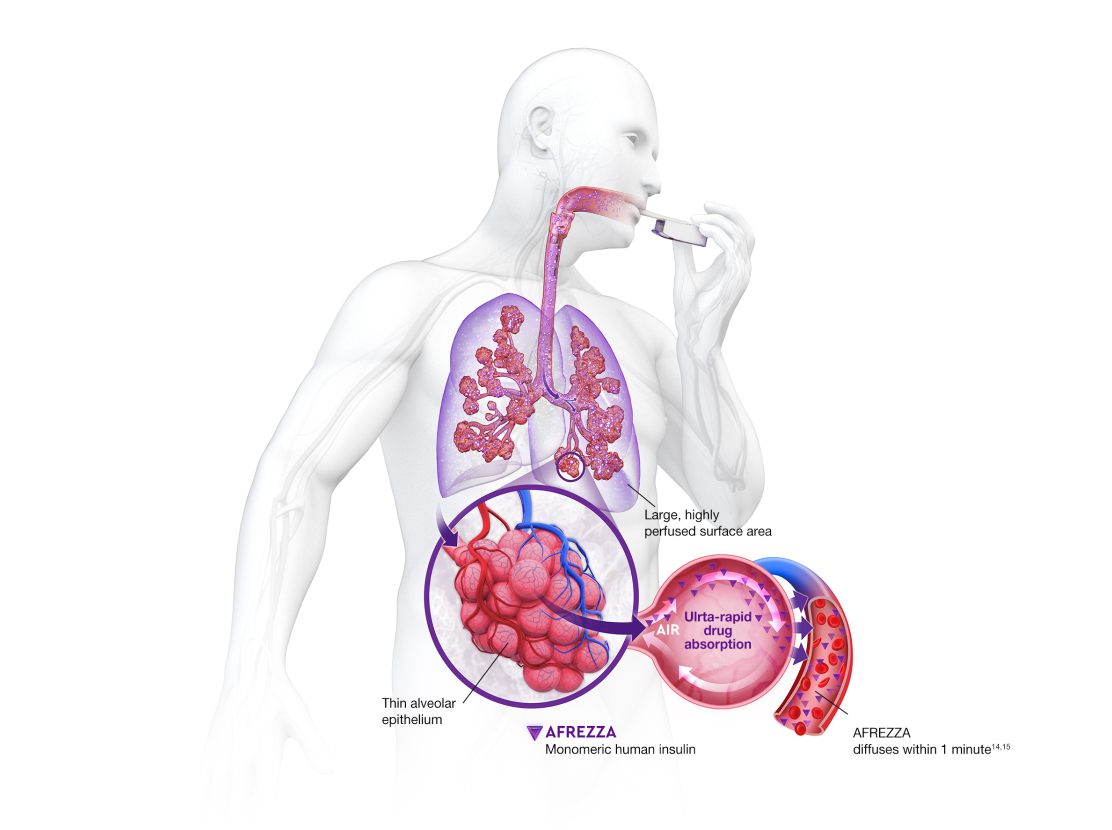
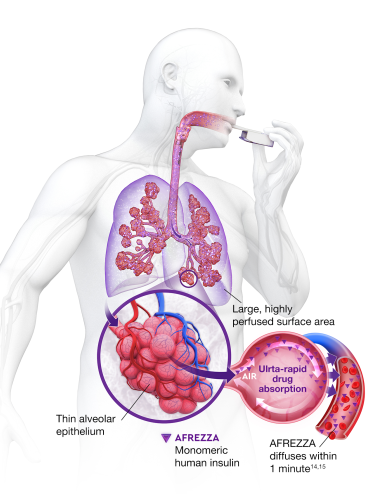
The lungs are well suited for ultra-rapid delivery6,11

AFREZZA is absorbed through the lungs without having to change molecular structure, pass through SC tissue, or undergo first-pass metabolism, thereby facilitating ultra-rapid absorption and ultra-rapid onset2,5,14
AUC, area under curve; GIR, glucose infusion rate; MGTT, mean glucose tolerance test; PD, pharmacodynamics; RAA, rapid-acting analog; SC, subcutaneous; SC RAA, subcutaneous rapid-acting analog; T1D, type 1 diabetes.
References: 1. Grant M, Heise T, Baughman R. Comparison of pharmacokinetics and pharmacodynamics of inhaled Technosphere insulin and subcutaneous insulin lispro in the treatment of type 1 diabetes mellitus. Clin Pharmacokinet. 2022;61(3):413-422. 2. AFREZZA. Prescribing information. MannKind Corporation; 2026. 3. Data on file (PK/PD). MannKind Corporation. 4. Data on file (PD Graph). MannKind Corporation. 5. Caumo A, Bergman RN, Cobelli C. Insulin sensitivity from meal tolerance tests in normal subjects: a minimal model index. J Clin Endocrinol Metab. 2000;85(11):4396-4402. 6. Heinemann L, Baughman R, Boss A, Hompesch M. Pharmacokinetic and pharmacodynamic properties of a novel inhaled insulin. J Diabetes Sci Technol. 2017;11(1):148-156. 7. Rave K, Heise T, Heinemann L, Boss AH. Inhaled Technosphere insulin in comparison to subcutaneous regular human insulin: time action profile and variability in subjects with type 2 diabetes. J Diabetes Sci Technol. 2008;2(2):205-212. 8. Levin P, Hoogwerf BJ, Snell-Bergeon J, Vigers T, Pyle L, Bromberger L. Ultra rapid-acting inhaled insulin improves glucose control in patients with type 2 diabetes mellitus. Endocr Pract. 2021;27(5):449-454. 9. FIASP. Prescribing information. Novo Nordisk; 2023. 10. LYUMJEV. Prescribing information. Eli Lilly and Company; 2022. 11. Heinemann L, Parkin CG. Rethinking the viability and utility of inhaled insulin in clinical practice. J Diabetes Res. 2018:4568903. 12. Sarala N, Bengalorkar G, Bhuvana K. Technosphere: new drug delivery system for inhaled insulin. Fut Prescriber. 2012;13:14-16. 13. Leone-Bay A, Baughman R, Smutney C, Kocinsky J. Innovation in drug delivery by inhalation. OnDrugDelivery Magazine. 2010;4-8. 14. Data on file (Effect of different doses). MannKind Corporation. 15. Grant M, Harris E, Leone-Bay A, Rousseau K. Technosphere®/insulin: method of action. Poster presented at: Diabetes Technology Society Meeting; November 2-4, 2006; Atlanta, GA.
© MannKind Corporation May 2026. US-AFR-2897